Friday, May 8, 2009
Project
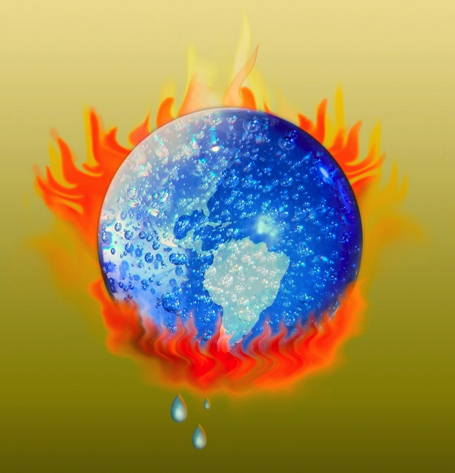
So I decided to do my project on how global warming effects the ocean/water. It was interesting to learn about but all of the articles were hard to understand so I kind of just picked a topic. Mr. Clauer came in while I was researching and even explained to me all of the physics about it that I supposedly learned last year but I don't remember. He explained to me about how it would heat up the ocean and then slowly the water will disappear because it will not be at an equilibrium. So ya that's my project summed up you'll hear more about it on Monday! Thanks :) I just wanted to put symbols!

Friday, May 1, 2009
PINK DOLPHIN!!!
There is only one pink bottlenose dolphin that was discovered in a lake in Louisianna. IT WAS IN THE US!!! Yay!! pretty dolphins :) It has become such a large attraction that the people taking care of it told the visitors to leave it alone. Hopefully it can stay alive because I like it and its cute!

New Project!!!!
So... you gave us this project this week!! AHHHH!!! well... we are supposed to find an article that we are interested in and do a reviewon it and then make a PowerPoint about it. I have not yet decided what I am going to do it on but I am thinking towards the rainbow fish or the Cyclichthys orbicularis. They both had an interesting appearance and were cute. OCEAN SUNFISH ARE RIDICULOUS THEY ARE HUGE!!!!!!! Jake just told me that because thats what he wants to do for his project! Well... I hope you enjoyed this blog :) Molly

The Jake Fish:
taken: by Jonathan Edelman @ the Omaha Zoo
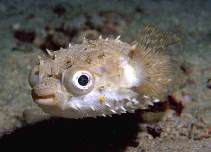
This is the Cyclichtys orbicularis
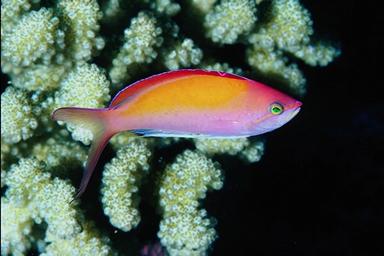
This is the rainbow fish:
Monday, April 20, 2009
http://66.37.232.214/pri/icam?name=camera1&pan=121.23&tilt=-38.02&oldzoom=1.0&oldscale=0.75&oldimage=7966&zoom=1.0&brightness=0&scale=0.75&quality=45&viewfinder.x=163&viewfinder.y=96
This is sooo cool you can see the penguins on a web cam and see what they are doing!!
This is sooo cool you can see the penguins on a web cam and see what they are doing!!
Omaha Zoo

Before break we went to the Omaha Zoo and got to see the aquarium. When we got there we had a sweet tour guide that took us behind the scenes after we saw what normal visitors did. He took us below the aquarium and showed us where all the water was stored and the corals. He told us that they store just as much water underneath that is in the tanks so it continues to be cleaned and has the same amount of water the whole time the tank is running. He took us above the aquarium and showed us how they feed the fish. We got to see the huge shark tank and it was scary because it was open and if you fell in you were dead and Jonathan almost passed out. I also got a little scared up there because I don't know how to swim so I was like ya if I fall i'm gonners. We had some extra time so we got to go see other things like the dome, desert thingy, and jungle/rainforest thing that took you through different parts of the world, and you can't forget shandra's "cats" they werent cats they were lions!! SCARY!! and the bats and snakes were scary too!It was cool that while we were eating we could still look out and see the cute monkeys that I wanted to take home :).

This is the "fake" thing that was real you scared me with and all of you guys laughed at me :(
Sunday, March 15, 2009
Fun Facts about Fish
- Fish have been on earth more than 450 million years
- There are over 25,000 species of fish on earth
- There may still be over 15,000 fish species that have not been identified
- There are more species of fish than all the species of amphibians, reptiles, birds and mammals combined.
- 40% of all fish species inhabit fresh water, yet less than .01% of the earth's water is fresh water
- Some fish make sounds by grating their teeth and others like some catfish make sounds from their air filled swim bladder.
- Some species of fish can fly (glide) others can skip along the surface and others can even climb rock.
- Fish have specialized sense organs called the lateral line which works much like radar and helps them navigate in dark or murky water.
- The largest fish is the great whale shark which can reach fifty feet long
- The smallest fish is the Phillippine goby which is less that 1/3 of an inch when fully grown.
- Some species of fish have skeletons made only of cartilage
- Fish have excellent senses of sight, touch, taste and many have a good sense of smell and hearing.
- Fish feel pain and suffer stress just like mammals and birds
- Tropical fish are one of the most popular pets in the U.S.
- 95% of tropical fish deaths results from improper housing and nutrition
- Many tropical fish sold in the United States are harvested from the wild in Africa, Asia and Central and South America.
Friday, February 27, 2009
Fish
The fish that I am looking at to put in my equarium are:
Green Chromis Fish: also known as Chromis viridis, it comes from the family of Pomacentridae It usually is about 3½ inches Usually is 74 to 78 degrees Fahrenheit It comes from the Indian and Pacific Oceans

Dispar Anthias Fish:
Description: known as the Madder Seaperch. males have a bright red dorsal fin and lack any red stripes on their tail. The female have a yellowish-orange on the top and pale lavendar to whit on the undersideDiet: Fed twice a day shrimp, amphipods and other macroscopic life
Size: 3-4"
Thursday, February 26, 2009
Algae

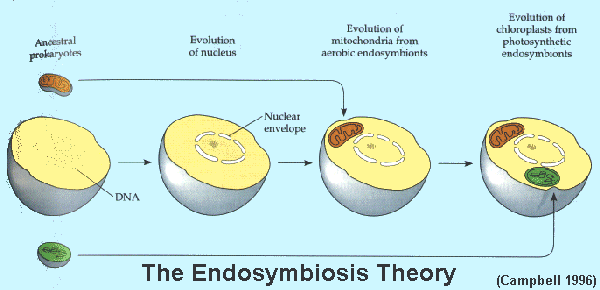
Endosymbiotic Theory: the origins of mitochondria and plastids (e.g. chloroplasts), which are organelles of eukaryotic cells. According to this theory, these organelles originated as separate prokaryotic organisms which were taken inside the cell as endosymbionts. (wikipedia)
Red Algae is also called Rhodophyta: different types of this include porphyra, chondrus and corallina
Brown algae is also called Phayeophyta: some examples of this are Desmarestia, Alaria, Fucus, Laminaria, Postelsia, and Macrocystis
Green algae is also called Chlorophyta: some examples of this are sea lettuce (ulva), Spirogyra, and Caulerpa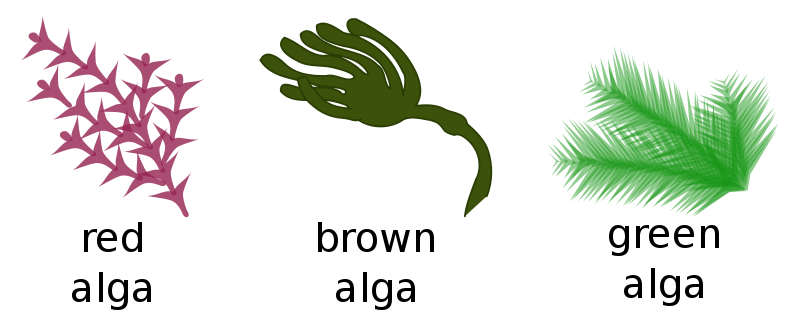 The Evolution of Seagrass from Algae:
The Evolution of Seagrass from Algae:1) Algae: Algae came first, it was the simplist but the oldest and aquatic.
2) Non Vascular land plants: This came second it includes mosses, Hornworts and liverworths, it is small and lives near water
3) vascular land plants: This came last when the plants moved into the water

Filtration
There are three types of Filtration:
1) Mechanical: This is best to filter out wastes
2) Chemical: This collects particles from the water like carbon (charcoil)
3) Biological: This is best for collecting wastes but is the most complicated out of the three
Things that are collected through the Filters are: Ammonia, Nitrite, and Nitrate
1) Mechanical: This is best to filter out wastes
2) Chemical: This collects particles from the water like carbon (charcoil)
3) Biological: This is best for collecting wastes but is the most complicated out of the three
Things that are collected through the Filters are: Ammonia, Nitrite, and Nitrate
Sunday, February 8, 2009
Transform Boundaries
Spring and Neap Tides
Subduction Zone:
Convergent Boundaries:
Divergent Boundaries:
Plate Tectonics: Rim (Ring of Fire)
Spring and Neap Tides
Subduction Zone:
Convergent Boundaries:
Divergent Boundaries:
Plate Tectonics: Rim (Ring of Fire)
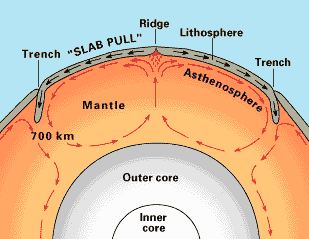
Plate Boundaries: Subduction Zones/Divergent Boundaries/ Convergent Boundaries:
Transform Boundaries: place where two plates slide past eachother
Water Molecule : H2O= One Oxygen and two Hydrogen Molecules
Hydrogen Bonds
Solids: Hold Shape
Liquids: Shape of the container it is in
Gas: No Shape
Density: Mass divided by volume
Solid Water to Liquid= Melting, Liquid to Water Vapor= Evaporation
Water Vapor to Liquid= Condensation, Liquid to Solid Water= Freezing
Sugar is a solute
Building Blocks of Life: Water,H2O: Carbon, C: Hydrogen, H: Oxygen, O2
Carbon, Hydrogen and Oxygen= Carbohydrates= Glucose and Fructose
Kyton- Structure of molecules for animals
Amino Acids- Make protein: Made up of Four Groups: Amino, Hydrogen, Carboxyl, and the R-Group
Different shape proteins have different types of jobs
Lipids are oils and fats
Nucleic Acids: made up of Adenine, Guanine, Cytosine, and Thymine
A,G,C and T make up DNA which makes RNA which makes Protein
ADP is formed into ATP
Prokaryote cells were formed first and before Eukaryote cells and they are more simplistic
Eukaryote cells are more complex
Benthos do not move and they live on the bottom of the water
Plankton live on the top of the water
Hypotonic: Higher Concentration of solute on the outside of the cell and goes into the cell
Isotonic: Equal concentration on the outside and inside of the cell
Hypertonic: Higher concentration of H2O on the Inside of the cell going out of the cell
Cold Water- Holds more gas
Villi are like little fingers in the lower intestine
Sunday, January 25, 2009


Subscribe to:
Posts (Atom)