Friday, February 27, 2009

Fish

The fish that I am looking at to put in my equarium are:


Green Chromis Fish: also known as Chromis viridis, it comes from the family of Pomacentridae It usually is about 3½ inches Usually is 74 to 78 degrees Fahrenheit It comes from the Indian and Pacific Oceans

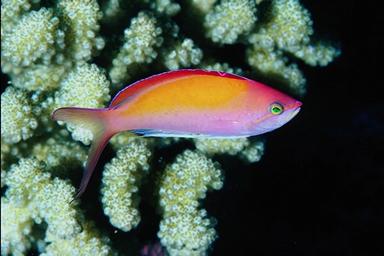
Dispar Anthias Fish: 
Description: known as the Madder Seaperch. males have a bright red dorsal fin and lack any red stripes on their tail. The female have a yellowish-orange on the top and pale lavendar to whit on the underside
Diet: Fed twice a day shrimp, amphipods and other macroscopic life
Size: 3-4"

Thursday, February 26, 2009

Algae


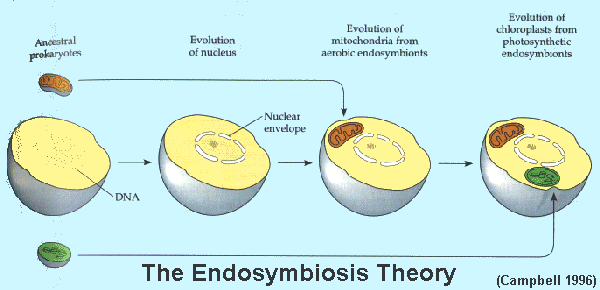
Endosymbiotic Theory: the origins of mitochondria and plastids (e.g. chloroplasts), which are organelles of eukaryotic cells. According to this theory, these organelles originated as separate prokaryotic organisms which were taken inside the cell as endosymbionts. (wikipedia)


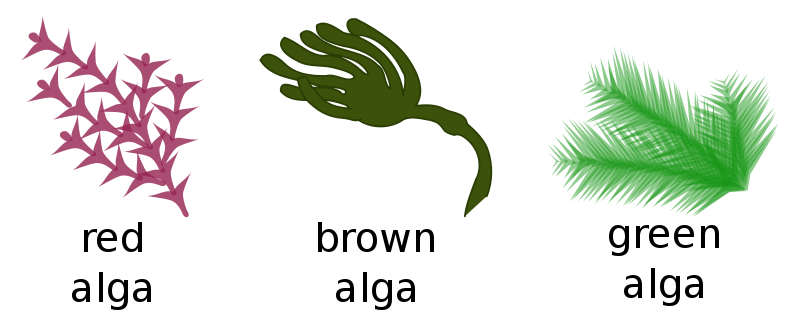
Red Algae is also called Rhodophyta: different types of this include porphyra, chondrus and corallina

Brown algae is also called Phayeophyta: some examples of this are Desmarestia, Alaria, Fucus, Laminaria, Postelsia, and Macrocystis


Green algae is also called Chlorophyta: some examples of this are sea lettuce (ulva), Spirogyra, and Caulerpa The Evolution of Seagrass from Algae:


1) Algae: Algae came first, it was the simplist but the oldest and aquatic.


2) Non Vascular land plants: This came second it includes mosses, Hornworts and liverworths, it is small and lives near water


3) vascular land plants: This came last when the plants moved into the water


Filtration

There are three types of Filtration:

1) Mechanical: This is best to filter out wastes
2) Chemical: This collects particles from the water like carbon (charcoil)
3) Biological: This is best for collecting wastes but is the most complicated out of the three

Things that are collected through the Filters are: Ammonia, Nitrite, and Nitrate

Sunday, February 8, 2009

Transform Boundaries
Spring and Neap Tides
Subduction Zone:
Convergent Boundaries:
Divergent Boundaries:
Plate Tectonics: Rim (Ring of Fire) 
Plate Boundaries: Subduction Zones/Divergent Boundaries/ Convergent Boundaries:
Transform Boundaries: place where two plates slide past eachother
Water Molecule : H2O= One Oxygen and two Hydrogen Molecules
Hydrogen Bonds
Solids: Hold Shape
Liquids: Shape of the container it is in 
Gas: No Shape 
Density: Mass divided by volume
Solid Water to Liquid= Melting, Liquid to Water Vapor= Evaporation
Water Vapor to Liquid= Condensation, Liquid to Solid Water= Freezing
Sugar is a solute
Building Blocks of Life: Water,H2O: Carbon, C: Hydrogen, H: Oxygen, O2
Carbon, Hydrogen and Oxygen= Carbohydrates= Glucose and Fructose
Kyton- Structure of molecules for animals
Amino Acids- Make protein: Made up of Four Groups: Amino, Hydrogen, Carboxyl, and the R-Group
Different shape proteins have different types of jobs
Lipids are oils and fats
Nucleic Acids: made up of Adenine, Guanine, Cytosine, and Thymine
A,G,C and T make up DNA which makes RNA which makes Protein
ADP is formed into ATP
Prokaryote cells were formed first and before Eukaryote cells and they are more simplistic
Eukaryote cells are more complex
Benthos do not move and they live on the bottom of the water
Plankton live on the top of the water
Hypotonic: Higher Concentration of solute on the outside of the cell and goes into the cell
Isotonic: Equal concentration on the outside and inside of the cell
Hypertonic: Higher concentration of H2O on the Inside of the cell going out of the cell
Cold Water- Holds more gas
Villi are like little fingers in the lower intestine